
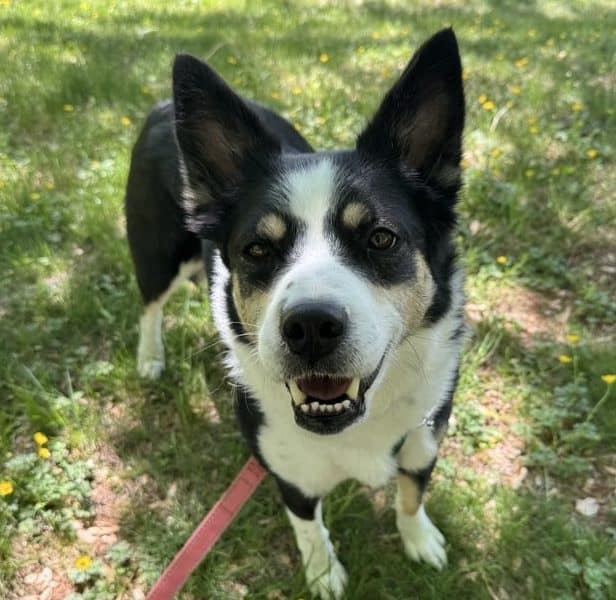
dog on a summer walk in Potomac MD.
Summer dog walking safety comes down to a few simple habits
By mid June the pavement in Montgomery County can hold heat long after the sun drops behind the trees. If you walk your dog at the same time you always have, you may be walking them on pavement that is genuinely too hot for their paws, in air that tires them out faster than you would expect. Summer in Maryland is humid as well as hot, and that combination is harder on dogs than dry heat. Here is how to keep your dog comfortable and safe through the warm months, without giving up the walks they love.
Check the pavement before you check the weather
The temperature on your phone tells you about the air, not the ground. On a sunny 87 degree afternoon, asphalt can climb well past 130 degrees, hot enough to burn the pads of your dog’s feet. Concrete is cooler than blacktop but still gets uncomfortable.
Use the ten second test: press the back of your hand flat against the pavement and hold it. If you cannot keep it there comfortably for ten seconds, it is too hot for your dog’s paws. When in doubt, walk on grass, dirt trails, or shaded paths, and keep your dog off long stretches of open blacktop in the middle of the day.
Walk early, walk late, skip the middle
The simplest fix for summer is timing. Morning walks before about 9 a.m. and evening walks after the worst of the heat are far safer than midday outings. The ground has had a chance to cool overnight, the sun is lower, and the humidity, while still present, is easier on a panting dog.
If your schedule keeps you at work through the cooler hours, this is exactly where a midday dog walker earns their keep. A professional walker can shift to shaded routes, shorten the distance, and adjust the pace so your dog gets exercise and a potty break without baking on the sidewalk. Our walks come in 30, 45, and 60 minute lengths, and in peak summer the right answer is often a shorter, smarter walk rather than a long one.
Watch for the early signs of overheating
Dogs do not sweat the way people do. They cool themselves mostly by panting, which works far less well in humid air. Heat exhaustion can move quickly, so learn the early signs and act on them:
- Heavy, frantic panting that does not slow down
- Bright red gums or tongue
- Thick, ropey drool
- Stumbling, weakness, or an unwillingness to keep moving
- Glazed eyes or unusual disorientation
If you see these, stop the walk, get your dog into shade or air conditioning, and offer small amounts of cool, not ice-cold, water. Wet their paws and belly. If they do not recover quickly, call your vet right away. Flat-faced breeds like bulldogs and pugs, senior dogs, overweight dogs, and very young puppies overheat faster than others and need extra caution.
Bring water, even on short walks
A dog on a summer walk needs water more often than you might think. For anything beyond a quick around the block trip, bring a collapsible bowl and offer water partway through. On longer outings, plan a route that passes a shady spot where you can pause and let your dog drink and cool down. Hydration is not just about comfort; it is one of the main things that keeps a dog’s natural cooling system working.
Mind the ticks and the trail conditions
Summer in Montgomery County also means peak tick season, especially along the wooded trails near the C&O Canal and the wider paths through Potomac and Gaithersburg. Keep your dog on tick prevention through the warm months, and make a tick check part of the routine after every summer walk, not just the long ones. Run your hands slowly over their whole body and check the spots ticks like most: inside and around the ears, under the collar, the armpits, the groin, between the toes, and around the tail. The sooner a tick is found and removed, the lower the risk it passes anything on.
A quick paw wipe after every walk is just as worthwhile in summer. Wiping down each paw clears off pollen, lawn-treatment chemicals, hot-pavement grime, and anything picked up along the trail before your dog can lick it off. It also gives you a few seconds to check the pads for cuts, cracks, or burns from hot surfaces, and to pull out any grass seeds or burrs caught between the toes. It takes under a minute and catches small problems before they become sore ones.
This is part of every summer visit for us. After a walk we check for ticks and wipe down paws as a matter of routine, so your dog comes back in clean and comfortable and nothing gets missed.
A note on humidity and “real feel”
Maryland’s summer humidity is the part people underestimate. A dog that handles 85 degrees easily on a dry day can struggle at the same temperature when the air is thick. When the heat index climbs into the 90s and beyond, treat it as a day for short, shaded, slow walks, or for indoor enrichment instead. A few minutes of sniffing and a puzzle feeder at home beats a miserable march through wet heat. There is no rule that says every day needs a long walk; on the worst days, less really is more.
Keeping summer walks happy
Summer does not have to mean cooped up dogs and skipped walks. With earlier outings, shaded routes, water on hand, and a close eye on the heat, your dog can stay active and comfortable straight through to fall. The key is flexibility, walking around the heat instead of through it.
If your workday keeps you away during the cooler morning and evening hours, that is the gap we fill for a lot of families across Montgomery County. We adjust every summer walk to the conditions, keep your dog safe, and send you an update so you know exactly how they did. If you would like a hand keeping your dog active this summer, we would love to talk about what would work best for your pup.
Recent Comments